Imagine a small agricultural enterprise near Ndendé growing corn and cassava. Weeds are gaining ground, herbicides are expensive, and some treatments arrive too late. The farm manager hears about machines capable of identifying an infested area, weeding with electricity, or stimulating plant defenses with light.
The temptation is strong: buy quickly, communicate about the innovation, hope for an immediate reduction in expenses. But for a farm, a cooperative, or a training farm, the real question is simpler: how to know if the tool provides a measurable gain without creating new risks?
What is it, concretely?
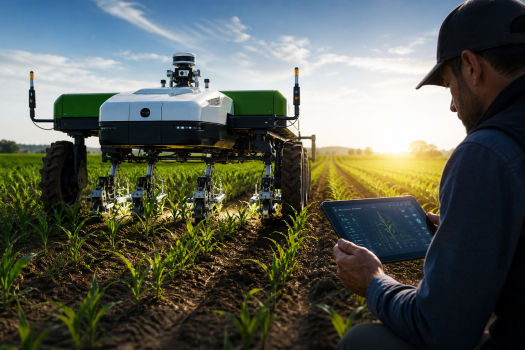
Smart weeders and detection agricultural tools help to see problems in the fields earlier and then act more precisely. Specifically, a camera, sensor, or software identifies a weed, a sick area, or plant stress. The farm can then treat only the useful area, use electric weeding, adjust spraying, or seek advice from a technician. The main challenge is not to have a spectacular machine, but to reduce waste, protect yield, and keep evidence of decisions. Good news: these tools can be tested on a small scale before any significant purchase.
Concrete case: what to do and what not to do
Questions to Ask Before Acting
What specific problem do we want to solve: weeds, disease, product costs, lack of labor, or delayed diagnosis?
Do we have baseline data: yields by area, treatment history, costs, weather, and field observations?
Who validates the final decision: agronomist, farm manager, quality manager, or trained technician?
Does the budget allow for a purchase, or should we go through a cooperative, a university, a rental, or a service?
What safety rules cover phytosanitary products, drones, electricity, UV, and collected data?
How to prove the gain: comparative trial, simple indicators, and end-of-campaign report?
Can local teams use and maintain the tool, or are we entirely dependent on an external provider?

 UNIVGA Press








 French
  English