Imagine that, in a small and medium-sized industrial enterprise in Moanda, a maintenance team replaces parts exposed to dust, shocks, and heat every month. Downtime is costly. The manager hesitates: should he import standard parts again or test new metal alloys designed with artificial intelligence (AI)?
In a university, a laboratory wants to train its students in this approach. Not to replace engineers, but to better select tests, reduce trial and error, and prepare materials useful for mines, furnaces, and metallurgical workshops.
What is it, concretely?
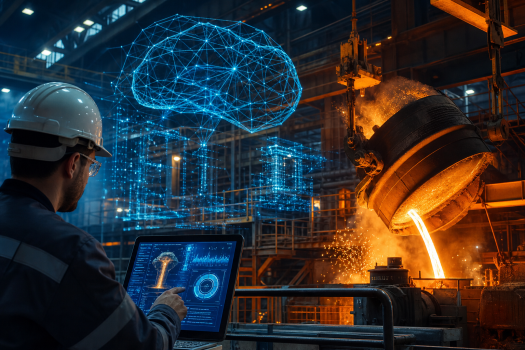
The subject is simple: use AI to accelerate the discovery of new metal alloys. Instead of randomly testing thousands of mixtures, software analyzes known results and proposes some promising recipes. Machines then produce small samples, researchers measure their hardness, heat resistance, or oxidation resistance, and these results are used to improve the next choice. The University of Toronto has applied this method to nickel-cobalt-chrome alloys suitable for metal printing. The key point: AI helps guide the tests, but it does not replace the laboratory, the engineer, or industrial validation.
Concrete case: what to do and what not to do
Questions to Ask Before Acting
What specific problem do we want to solve: wear, heat, corrosion, breakage, lead time, or supply cost ?
Are the data on parts, failures, and production stoppages reliable ?
Can a local or partner laboratory test the material before a pilot line ?
Do the teams understand the limits of AI and metal printing ?
Does the total cost remain better with material, energy, maintenance, training, and certification ?
Who owns the data and results: the company, the supplier, the laboratory, or a foreign platform ?
Does the project strengthen local processing and national skills, or does it create a new dependency ?

 UNIVGA Press






 French
  English