Recent articles

Gabon in the Spotlight: UNIVGA Re-elected to the Executive Board of CINVU

The Fourth General Assembly of CINVU

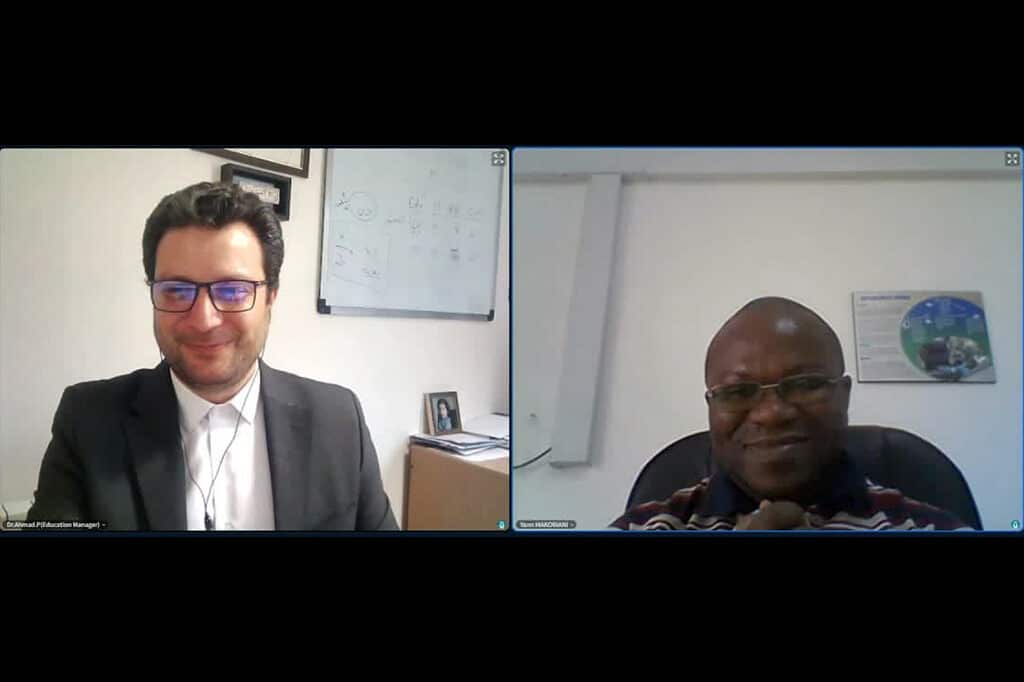
Partnership between UNIVGA GROUP and MIT Nabeul
 Certificate
Professional Certificate in Business Intelligence with Excel and Power BI
3 months
Code: 162779
100% Online
$380
Certified
UNIVGA
Discover the program
Job Description:
As a Numerical Modeling and Simulation Engineer, your expertise lies in creating complex mathematical models and using computer simulations to understand, analyze, and solve problems in various fields. You design numerical models to simulate physical, biological, economic, or technological phenomena, using advanced computing tools. Your work contributes to informed decision-making, process optimization, and solving complex problems.
Career Opportunities:
- Industrial Simulation Engineer: Apply numerical modeling to optimize manufacturing processes and improve industrial efficiency.
- Aerospace and Astronautics Engineer: Model and simulate the behavior of aircraft and spacecraft to improve their design and performance.
- Environmental Engineer: Use numerical modeling to assess the environmental impact of projects and propose sustainable solutions.
- Digital Biology Engineer: Apply numerical simulation to understand biological processes and develop solutions in the field of biology.
- Quantitative Finance Engineer: Model financial markets and simulate scenarios to make informed decisions in finance.
- Digital Health Engineer: Develop models to simulate health systems, optimize care, and facilitate medical research.
- Civil Engineering Engineer: Use numerical modeling to design civil infrastructures, assess their resilience, and predict their durability.
- Renewable Energy Engineer: Simulate energy systems to optimize the use of renewable energy sources.
- Telecommunications Engineer: Model and simulate communication networks to optimize performance and security.
- Fluid Mechanics Engineer: Apply numerical modeling to understand fluid flows and improve the design of hydraulic systems.
Advantages of the profession:
- Technological Innovation: Contribute to innovation by using advanced techniques in numerical modeling and simulation.
- Customized Solutions: Develop tailored solutions to solve specific problems in various sectors.
- Process Optimization: Improve operational efficiency by identifying and optimizing processes through numerical simulation.
- Informed Decision-Making: Provide reliable data and predictive scenarios to support strategic decision-making.
- Multidisciplinary Career: Working in various sectors, from industry to health to aerospace, offers a multidisciplinary and diverse career.
- Demand for Specialized Skills: Benefit from a strong demand for specialized skills in modeling and numerical simulation.
- Interdisciplinary Collaboration: Collaborate with professionals from various fields to solve complex and interdisciplinary problems.
- Intellectual Challenges: Tackle stimulating intellectual challenges by modeling complex systems and developing accurate simulations.
- Continuous Training: The evolving nature of numerical modeling technologies offers ongoing training and professional development opportunities.
-
Enhancement of Virtual Engineering: Contribute to the transition to virtual engineering, where numerical simulation plays a central role in the design and analysis process.




 French
  English