Imagine a biomedical technician in a hospital facing a critical piece of equipment that is down. The specialized engineer is not available on-site. Rather than waiting for several hours, he shares in real-time what he sees with a remote expert while keeping his hands free.
Now imagine a small or medium-sized enterprise (SME) or a university, with a novice maintenance agent in front of a sensitive installation. Visual instructions appear, a specialist observes the situation, and the repair progresses. In the oil and gas sector, this scenario could involve a pump, a valve, or a compressor.
What is it, concretely?
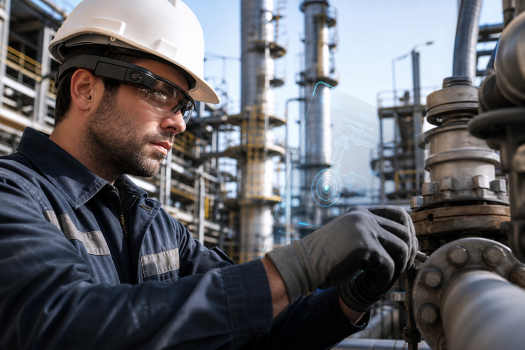
A platform like RemoteSpark allows a technician on-site to show a remote expert what he sees, via smart glasses, a tablet, a computer, or a phone. The expert can talk to him, guide a gesture, display a document, or request the recording of an intervention. In a refinery, a terminal, a liquefied natural gas (LNG) unit, or a depot, the benefit is clear: reduce waiting time, limit certain travel, and better transmit the knowledge of an experienced specialist. The key point remains control: the tool aids decision-making, but it does not replace procedures, intervention authorization, or human responsibility.
Concrete case: what to do and what not to do
Questions to Ask Before Acting
What problem do we want to solve: breakdown, inspection, training, safety, or reduction of travel?
Can technicians use the tool with their personal protective equipment (PPE)?
Which areas allow the use of glasses, phones, or tablets?
Who sees the images live, who records them, and who can review them?
Do the data remain compliant with internal and local rules?
Is a procedure resulting from a recording or AI validated by an HSE manager?
What indicator will prove the usefulness of the pilot: downtime, faster diagnosis, avoided incidents, or accelerated training?

 UNIVGA Press






 French
  English