Recent articles
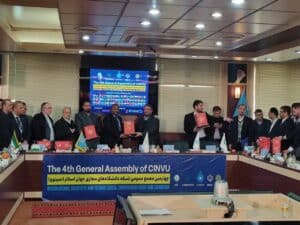
Gabon in the Spotlight: UNIVGA Re-elected to the Executive Board of CINVU

The Fourth General Assembly of CINVU

Partnership between UNIVGA GROUP and MIT Nabeul
 Certificate
Professional Certificate in Business Intelligence with Excel and Power BI
Description of the Control and Automation Engineer profession:
A control and automation engineer is a professional specialized in the design, development, implementation, and maintenance of automatic control systems. These systems are used in a variety of fields such as manufacturing, industrial automation, aerospace, energy, and other sectors where complex processes require precise regulation. The responsibilities of a control and automation engineer include:
- Design of control systems Design automatic control systems based on project specifications and client needs.
- Programming and development Write the code and develop the necessary software to implement control systems, using specialized programming languages.
- Equipment integration Integrate various components, sensors, actuators, and other equipment into the overall control system.
- Testing and commissioning Perform tests to verify system performance, detect any anomalies, and ensure successful commissioning.
- Preventive and corrective maintenance Ensure regular maintenance of control systems, anticipate potential failures, and intervene to resolve issues when they arise.
- Performance optimization Work on optimizing the performance of control systems by adjusting parameters and implementing continuous improvements.
Job prospects for Control and Automation Engineers:
Control and automation engineers are sought after in various environments, including:
- Manufacturing Industry Work in factories to design and implement control systems to automate production lines.
- Industrial automation Participate in industrial automation projects to optimize processes in sectors such as chemistry, petrochemistry, metallurgy, etc.
- Aerospace Contribute to the design of control systems for spacecraft and aerospace equipment.
- Energy Work on projects related to the production, distribution, and management of energy, particularly in the field of renewable energy.
- Transport systems Participate in the design of control systems for automated transport, such as automatic subways, high-speed trains, etc.
Advantages of the Control and Automation Engineer Profession:
- Technical satisfaction Work on technically challenging and complex projects.
- Growing demand With the increasing automation of industrial processes, the demand for control and automation engineers is constantly rising.
- Versatility Work in various sectors, offering a variety of projects and opportunities.
- Innovation Contribute to innovation by developing advanced automatic control solutions.
- Professional development Stay informed about the latest technologies and best practices in the field of automation and control.
In summary, the profession of Control and Automation Engineer offers exciting opportunities for those who enjoy working on complex systems and contributing to the efficiency and automation of industrial processes. These professionals play a crucial role in the design and maintenance of control systems that significantly impact productivity and quality in industrial operations.





 French
  English