
Recent articles

Gabon in the Spotlight: UNIVGA Re-elected to the Executive Board of CINVU
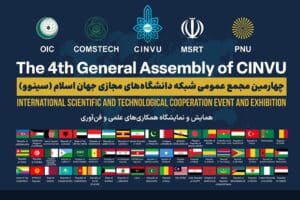
The Fourth General Assembly of CINVU

Partnership between UNIVGA GROUP and MIT Nabeul
 Certificate
Professional Certificate in Business Intelligence with Excel and Power BI
Description of the Profession of Environmental Information Systems Expert:
An expert in environmental information systems is a professional specialized in the design, development, and management of information systems dedicated to the collection, analysis, and management of data related to the environment. These systems aim to provide useful information for decision-making and the sustainable management of natural resources. The responsibilities of an expert in environmental information systems include:
- System design : Developing information systems that allow for the collection of environmental data from various sources.
- Data integration : Integrating data from sensors, satellites, existing databases, and other sources to create a holistic view of environmental parameters.
- Analysis and modeling : Applying analysis and modeling techniques to interpret environmental data and extract significant trends.
- Data Visualization : Designing user interfaces and visualization tools to present environmental information clearly and accessibly to decision-makers and the general public.
- Sustainable Development : Contributing to the development of sustainable strategies using the information generated by the systems.
- Regulatory monitoring : Keeping track of regulatory developments related to the environment and ensuring that information systems comply with current standards and requirements.
Opportunities for Experts in Environmental Information Systems:
Experts in environmental information systems can work in various environments, including:
- Government organizations : Contributing to natural resource management, environmental monitoring, and policy decision-making.
- Non-governmental organizations (NGOs) : Participating in environmental projects, data collection, and awareness-raising.
- Private companies : Working for companies involved in environmental initiatives, such as sustainable natural resource management.
- Research and development : Contributing to scientific research by providing tools and information for environmental studies.
- Environmental consulting : Providing consulting services to help companies comply with environmental regulations.
Benefits of the Environmental Information Systems Expert Profession:
- Positive impact on the environment : Contributing to the sustainable management of natural resources and the protection of the environment.
- Use of advanced technologies : Working with cutting-edge technologies such as environmental sensors, remote sensing, and geographic information systems (GIS).
- Variety of missions : Working on a variety of environmental projects, each presenting its own challenges and opportunities.
- Multidisciplinary collaboration : Working with experts in environmental science, computer science, statistics, and other fields to achieve common goals.
- Recognition of environmental importance : Being at the heart of efforts to address global environmental challenges.
In summary, the profession of Expert in Environmental Information Systems offers exciting opportunities for those passionate about using technology to solve critical environmental problems and contribute to the sustainability of our planet. These professionals play a vital role in the collection, analysis, and communication of crucial environmental data for informed decision-making.




 French
  English