Imagine that in a hospital in Libreville, a patient falls in a corridor. The report is filled out, signed, and then archived. Everything seems in order. Yet, the real cause remains unclear: wet floor, lack of signage, poorly stored stretcher, staff overload, or misunderstood procedure?
In a construction SME, the same scene occurs after an injury on site. The quality, hygiene, safety, and environment (QHSE) manager wants to act quickly. An artificial intelligence (AI) suggests a cause and actions. Good assistance, or a risk of incorrect conclusion?
Recent articles

Offshore: Oxy and Valaris awarded, HSE AI must remain human

MOL solar and battery branch, the cost remains to be proven
Sustainable wood: AFi promotes traceability towards proof
 Certificate
BACHELOR 1&2 IN QHSE (QUALITY, HYGIENE, SAFETY, ENVIRONMENT)
What is it, concretely?
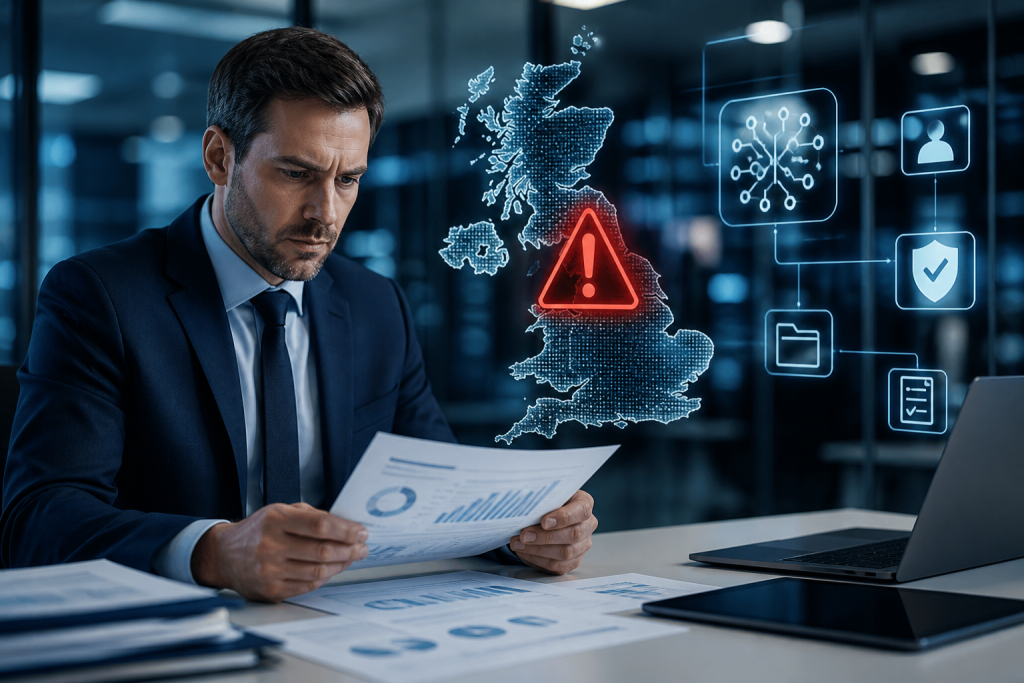
After an accident or near miss, an organization writes a report: observed facts, probable causes, measures to be taken. The problem is that a file can be complete in form but weak in substance. HavenASSURE acts as a quality controller for safety investigations: it reviews the available elements, flags absent evidence, overly quick explanations, and poorly defined corrective actions. The main issue is to prevent a poor analysis from becoming a false lesson learned. For a non-specialist, think of an internal audit: the tool helps to identify inconsistencies, but it does not replace the investigator or the manager who signs off on the decision.
Concrete case: what to do and what not to do
Questions to Ask Before Acting
- Does the AI indicate what evidence it bases its remarks on?
- Who validates the final conclusion: QHSE, human resources, management, or the safety committee?
- Does the file contain sensitive data: health, identity, images, videos, or geolocation?
- Have the concerned workers been heard before concluding?
- Do the actions really reduce the risk, or are they limited to retraining?
- Does the company keep a clear record of human decisions made after the recommendation?
- Does the tool comply with local obligations and the standards of the International Organization for Standardization (ISO), including ISO 45001, ISO 9001, and ISO 14001?
UNIVGA Viewpoint
Sources
- Haven Safety Unveils HavenASSURE, Gains SOC 2 Approval, Mirage News
- ISO 45001 explained, ISO
- Responsible AI for Safety Investigations, Haven Safety
- Introducing HavenASSURE, Haven Safety AI
- National Safety Council and Wolters Kluwer Enablon Report Finds Adoption of AI Growing Rapidly Among EHS Professionals
- Journal Officiel de la République Gabonaise, Code du travail
- Journal Officiel de la République Gabonaise, protection des données personnelles



 French
  English